A bank statement is accurate but not friendly. Each line has a date, an amount and a narration, the short text your bank writes to describe the payment. Learning to read narrations makes it much easier to spot what is yours and what is not.
Common prefixes
- UPI: a payment made through the Unified Payments Interface, usually followed by the person or merchant’s UPI ID or name and a reference number.
- NEFT, IMPS and RTGS: bank-to-bank transfers. IMPS is instant, NEFT is for ordinary transfers and RTGS is for large-value ones.
- NACH or ECS: an automatic debit set up by a mandate, common for loan EMIs, insurance premiums and subscriptions.
- POS: a card swiped or tapped at a shop terminal.
- ECOM or online: a card payment on a website or app.
- ATM or ATM-WDL: a cash withdrawal.
- INT or CHRG: interest or a bank charge.
Finding the merchant inside
The merchant is usually somewhere in the middle of the narration, often shortened or mixed with a reference number. “UPI/4821903/SWIGGY/okaxis” is a Swiggy payment. When the name is unclear, the date and amount usually jog your memory, and the merchant’s own app or email will confirm it.
Why the same shop looks different each time
Banks and payment apps write narrations differently, and some include a changing reference number. This is why one shop can appear under several names, and why tidy merchant names matter for reports.
Let software do the reading
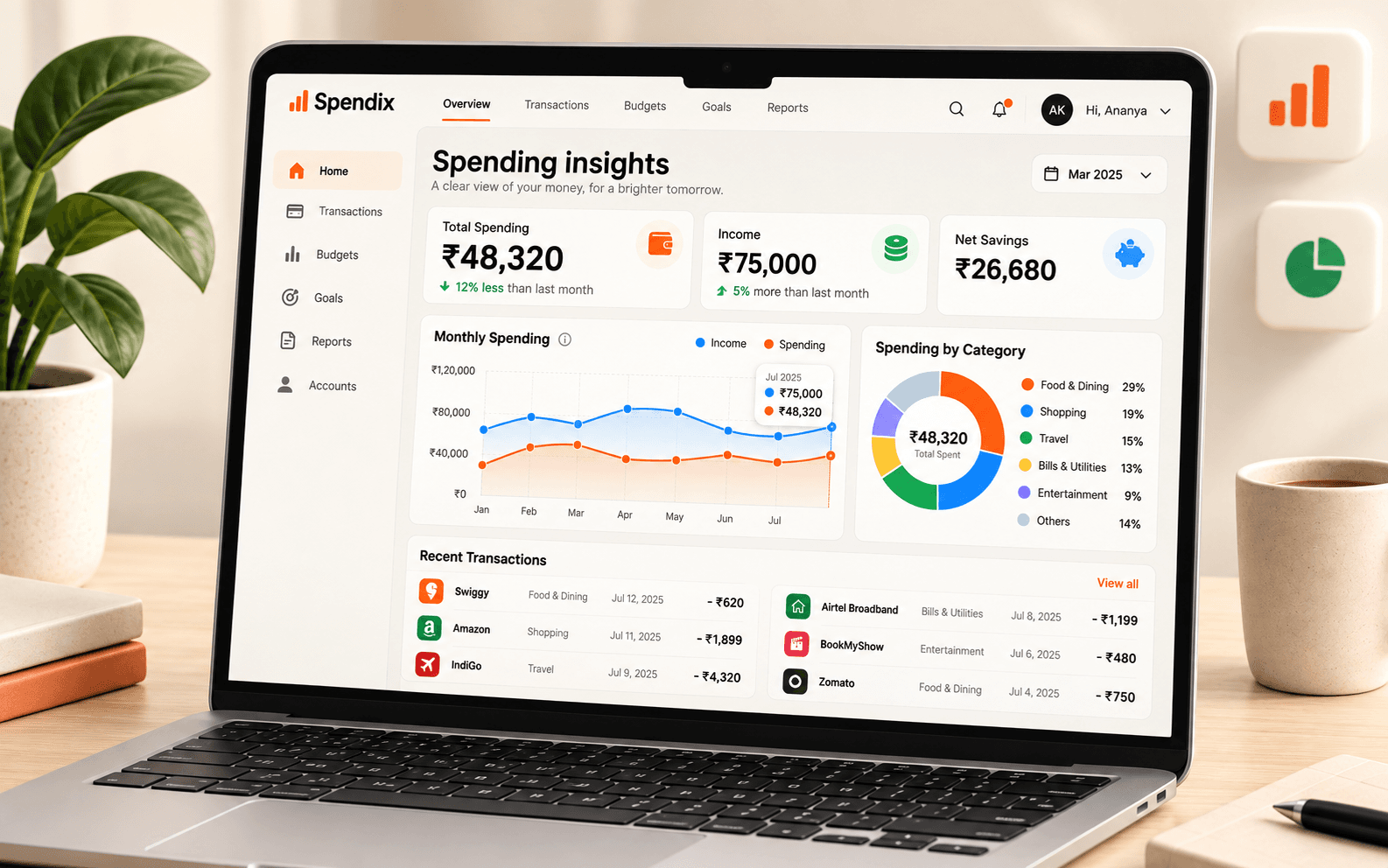
SpendixAI reads these narrations when you import a statement, tries to resolve the merchant and suggests a category. Where it cannot, you correct it once, add the spelling as an alias for that merchant, and the next import is matched automatically.
Make sense of every transaction.
Search, filter, and organise your income and expenses as your financial history grows.