A credit card is a convenient tool and an easy place for costs to hide. The spending is visible, but the fees and interest are often small lines you scroll past.
Charges to look for
- Interest: charged when you carry a balance past the due date, and often at a high rate.
- Late payment fees: charged when the minimum due is missed.
- Annual or joining fees, which some cards waive after a spending target.
- GST on fees and interest, shown as separate lines such as IGST or CGST and SGST.
- Foreign currency markup: a percentage added to spending in another currency.
- Cash advance fees, if you withdraw cash on the card.
Minimum due is not the same as paying off
Paying only the minimum keeps the account in good standing, but the rest of the balance starts attracting interest. If you can, pay the full statement amount each month.
Utilisation: how much of your limit you use
Utilisation is your balance divided by your credit limit. A balance of ₹30,000 on a ₹1,00,000 limit is 30%. Lenders often like to see a modest share of the limit in use, and many people aim to keep it comfortably below the limit, but there is no single right number.
See it in your own data
- The Credit-card fees and interest report lists GST, markup, fee and interest lines on your cards, with how often each was charged.
- The Credit-card share of spend report shows whether more of your spending is moving onto cards over time.
- Set the credit limit and billing cycle day on the card’s account to keep the picture accurate.
Three habits that help
- Set a reminder for the due date, not just the statement date.
- Pay the full amount when you can.
- Review the fee report every few months and ask your bank to waive or reverse a charge you did not expect.
Account overview
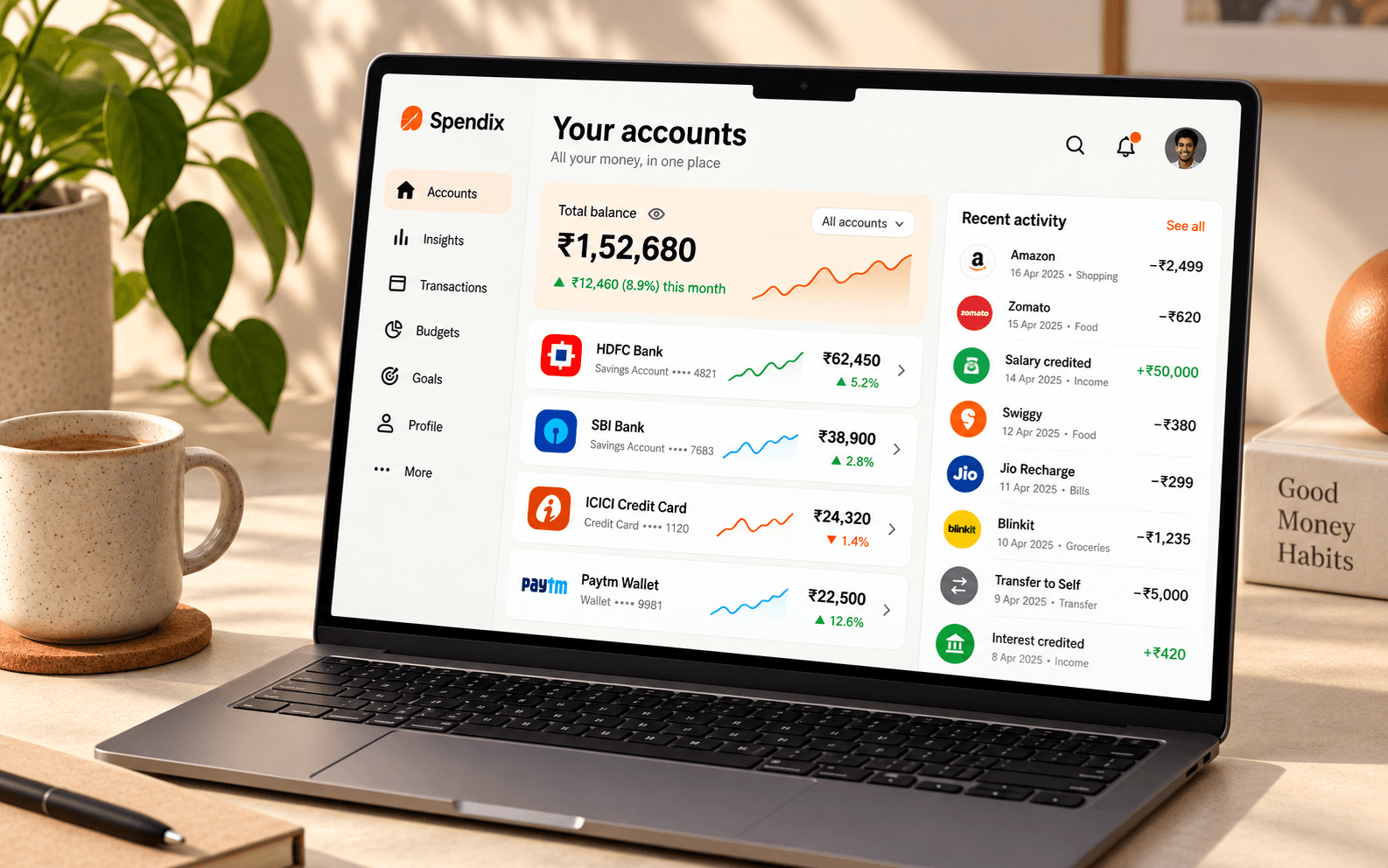
Explore this feature See your accounts together.
Understand balances and activity across your financial accounts without losing the details.