A different set of problems
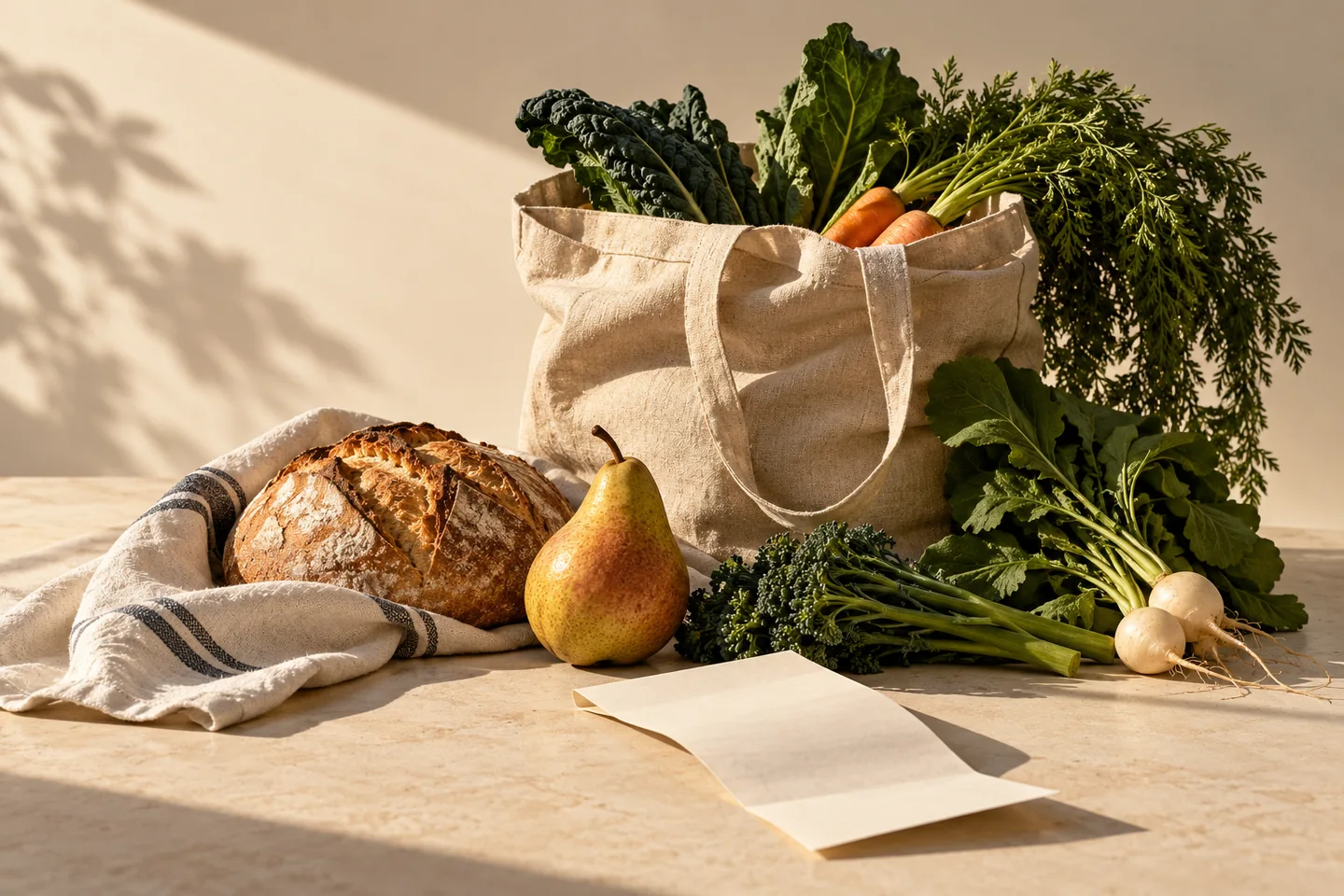
Households of one face a grocery problem that larger ones do not. Most products are packaged for several people, fresh items spoil before they are finished, and cooking a full meal for one person can feel like too much work. The common results are higher costs per portion, more takeaway meals and a fridge that holds a mix of intentions and leftovers.
Tracking a few weeks of small baskets can show where the money goes and which adjustments are realistic.
What to record
For each shopping trip, log the merchant, the total and a one-line note on what the trip was for: a main shop, a top-up, a single meal. Adding a note of how many days the basket was expected to last gives a useful metric: cost per day of groceries.
Suppose a main shop of 1,400 units is expected to last eight days. The daily food cost is 175 units. A top-up of 220 units for two more days is 110 per day, lower than the main shop, which hints that the bigger trip includes extras.
The three-trip pattern
Many solo households fall into a pattern of three kinds of trip:
- The planned main shop, usually weekly.
- The midweek top-up for fresh items.
- The unplanned dash for something forgotten or a spontaneous meal.
Labelling each trip with its type for four weeks reveals which one dominates the spending. If unplanned dashes account for a third of the monthly total, the fix is improving the list. If top-ups are costly, buying less perishable food or freezing portions could help.
Pack size and portion thinking
Instead of comparing price per kilogram alone, compare the cost per portion actually eaten. A large pack that yields ten portions, of which six are eaten, has a cost per eaten portion that is nearly double the sticker maths. Smaller packs, loose items sold by weight and frozen portions often look more expensive per unit but turn out cheaper once waste is counted.
| Option | Price | Portions bought | Portions eaten | Cost per eaten portion |
|---|---|---|---|---|
| Large pack | 180 | 10 | 6 | 30 |
| Small pack | 110 | 5 | 5 | 22 |
The numbers are illustrative; the lesson is to count what reaches the plate.
Making cooking for one easier
Reducing effort helps keep food spending under control. Cooking a double portion and storing half, using a few multi-purpose ingredients and keeping a short list of go-to meals all reduce the pull of takeaway. Record takeaway orders in their own category and compare them with grocery spending weekly, so that the trade-off is visible.
Setting a realistic budget
After a month of notes, set a weekly allowance based on the average cost per day, plus a small allowance for treats. Compare each week with the allowance. If the numbers repeatedly go over, adjust either the allowance or the approach, and avoid blaming personal discipline.
A solo budget works best when it respects how the household actually lives. It should make food easier, not stricter.
Reading the trend over a quarter
After twelve weeks of small-basket notes, compare the average cost per day with the earlier weeks. A falling figure suggests the shopping is better matched to the household’s pace. A rising one may reflect price changes or more spontaneous meals. Either way, the trend is informative, and it is much easier to read when each trip has a one-line label saying what it was for. Keep the notes short and consistent, and let the pattern speak.
A weekly check-in
Once a week, look at the small-basket notes and write one line on how the week went. Short check-ins keep the habit light and catch drift early.
Useful ideas start with a clearer picture of your own spending.
Explore your reports