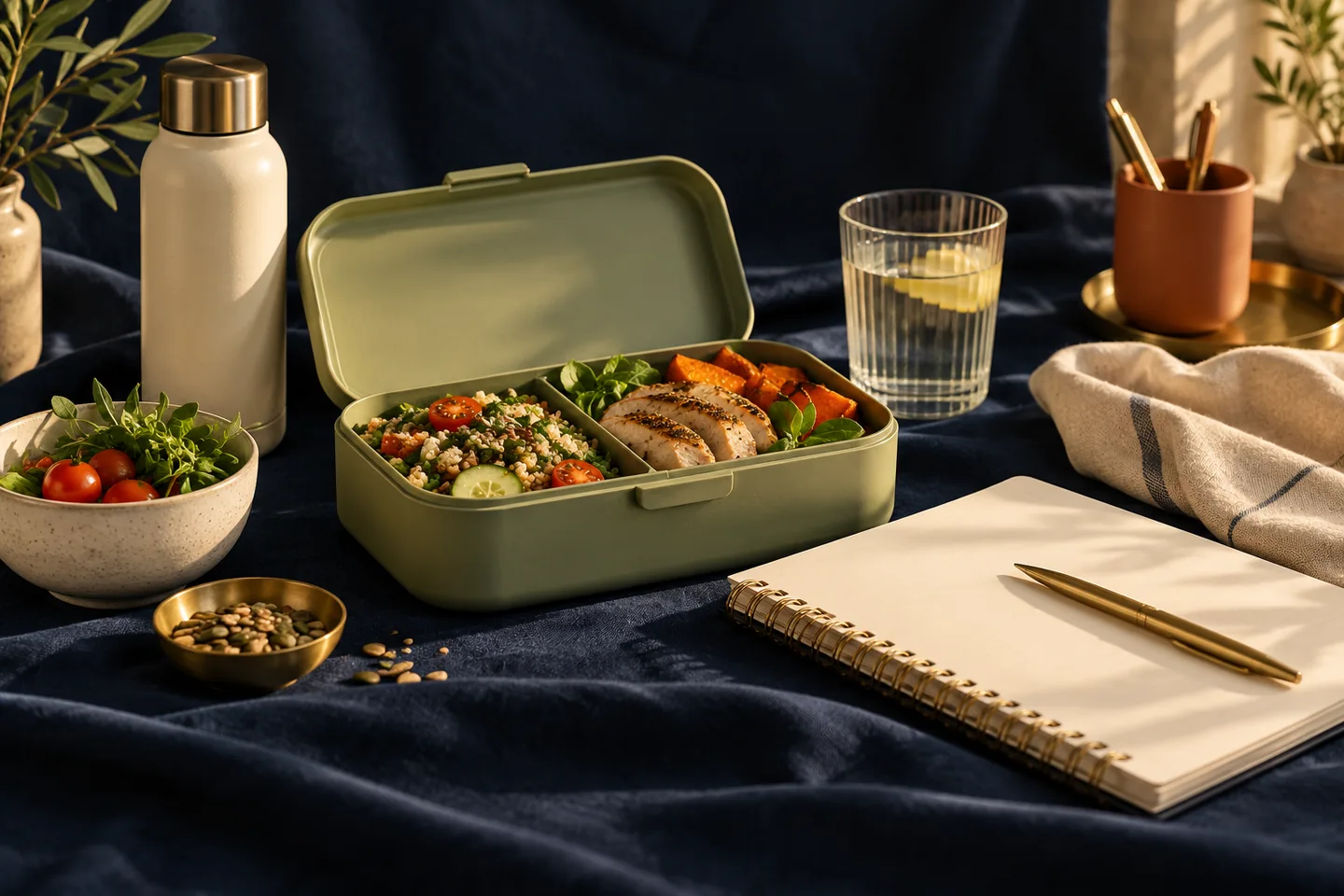
Counting what goes into the box
A lunch box has many small parts: a main item, a side, a fruit, a snack and sometimes a drink. The cost of each is small, and no one adds them. Summing them for a week provides a figure to compare with buying lunch and to use in planning.
Build the weekly tally
For five days, write down what went into each box and its approximate cost, using grocery prices. Include a share of fuel and any items replaced regularly, such as napkins or wraps.
| Day | Main | Side and fruit | Extras | Total (units) |
|---|---|---|---|---|
| Monday | 28 | 22 | 6 | 56 |
| Tuesday | 32 | 18 | 6 | 56 |
| Wednesday | 25 | 24 | 6 | 55 |
| Thursday | 30 | 20 | 6 | 56 |
| Friday | 35 | 22 | 6 | 63 |
The week costs about 286 units. For a month of four weeks, that is around 1,150 per person.
Compare with the alternatives
A school canteen meal, a canteen at the office or a nearby restaurant will each have their own price. Use the same method as the packed lunch: multiply the daily price by days attended. If the alternatives cost 90, 120 and 160 per day, the monthly amounts are 1,800, 2,400 and 3,200.
The packed lunch is cheaper, though the comparison omits time spent preparing it. A household can decide whether the time and effort are acceptable, perhaps by preparing parts the previous evening.
Reduce waste in the box
The most expensive packed lunch is the one that comes home uneaten. If a child or colleague regularly leaves food, reduce the portion or change the contents. Ask what was eaten first and what was left, and adjust. A few small changes can cut waste significantly.
Use leftover dinner components when they suit, which reduces both cost and effort.
Containers and their upkeep
Good containers last for years, but leaking lids and lost boxes need replacing. Treat these as a small annual cost. Buying one reliable box rather than several cheap ones may save money over time. Also consider whether insulated bags or flasks are needed for particular foods, and include their cost.
Track in the app
Log a weekly entry in Groceries or tag the relevant purchases “lunch boxes”. A monthly tag total shows how much the household spends on packed lunches. For households with several lunch boxes, separate tags per person show where the cost is concentrated.
Celebrate small wins
If the household moves from buying lunch to packing it three days a week, compute the monthly difference and note it. Seeing the figure helps maintain the habit, and the money saved can be directed towards a goal. Small, repeated savings are an accessible way to build a larger result over time.
When children eat at school
Where school provides a meal or a canteen subscription, compare it with the packed lunch on equal terms: cost per week, variety and how much is eaten. Some families use a mix, with packed lunches on busy days and canteen meals on others. Whatever the choice, record both costs under the same tag so the total lunch spending is visible. A change of school or schedule is the moment to redo the comparison.
Mixing fresh and prepared items
A box need not be fully home-made to be good value. A home-cooked main with a purchased fruit or a ready snack still costs less than a full bought meal. Price each component separately and mix to taste. The weekly tally shows which combinations offer the best balance of cost, effort and appeal, and it lets the household make the choice without feeling it is either all or nothing.
Useful ideas start with a clearer picture of your own spending.
Explore your reports