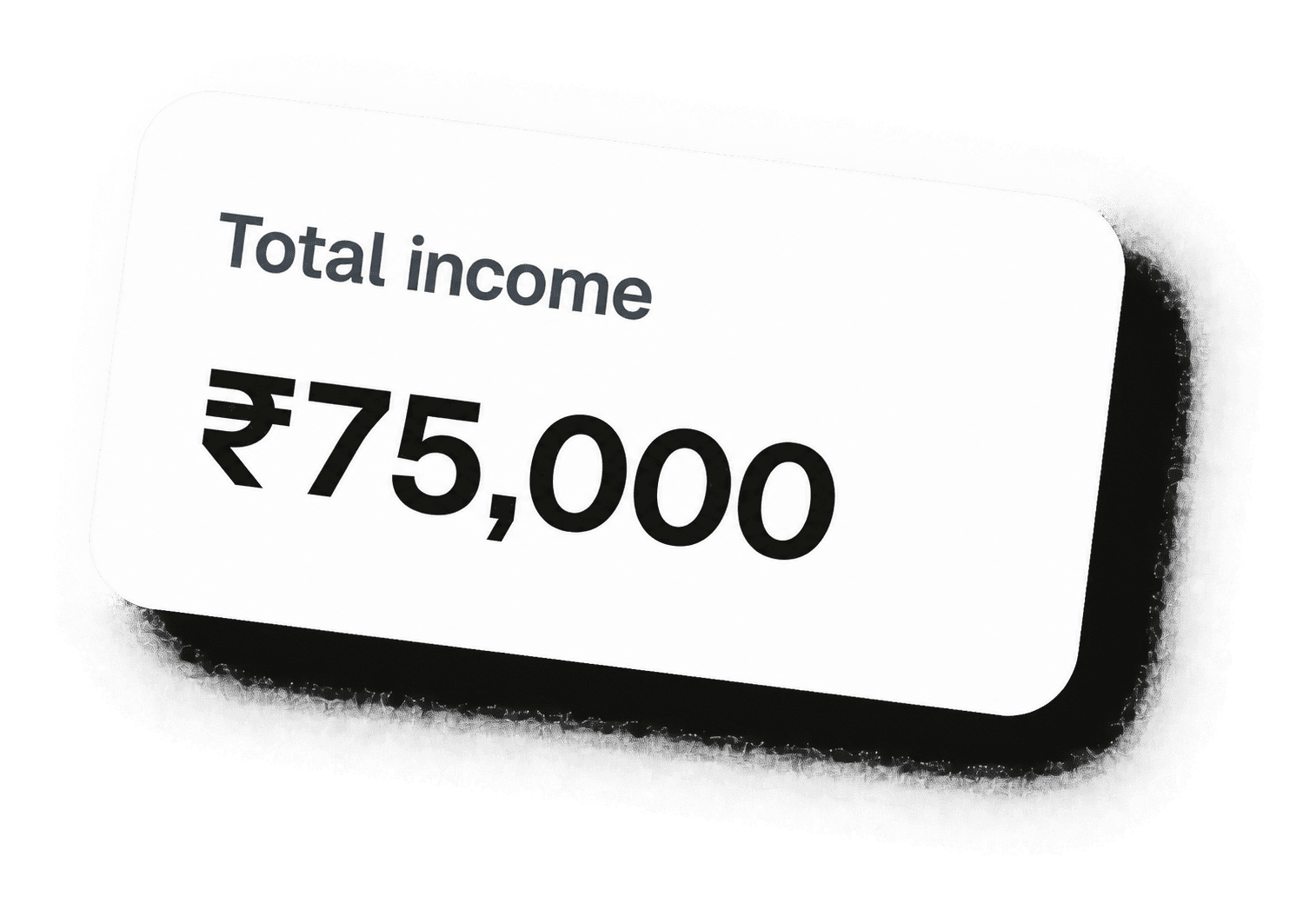
A budget tells you where money went. Your savings rate tells you whether you are getting ahead. It is the share of your income that you keep each month.
The formula
Savings rate = (income − expenses) ÷ income. If you earn ₹90,000 and spend ₹66,000, you keep ₹24,000, which is 26.7% of your income.
Calculating it from real transactions
Add up the money that came in, then the money that went out, for the same month. Two things trip people up:
- Transfers between your own accounts are not income or spending. Leave them out, or they inflate both sides.
- Refunds are not income, but they are credits. A month with a large refund can look better than it was.
The Savings rate by month report in the Report library shows income, expenses, the amount kept and the rate for each month. It counts every credit as income, so check months with unusual credits before drawing conclusions.
Look at the trend, not one month
A single month can be thrown off by an annual insurance premium, a trip or a bonus. If your income varies, compare three-month or six-month totals instead.
Three ways to raise it
- Raise income: a raise, a side project or a better-paid role moves the top of the formula.
- Trim the biggest categories: the 80/20 category analysis shows which few categories make up most of your spending.
- Cut recurring costs: subscriptions and fees are the easiest savings to keep, because you only decide once.
A clearer story in every report.
Explore totals, trends, and account activity in reports you can actually use.