Paper that does not last
Many shop receipts are printed on thermal paper. The print fades with heat, light and time, sometimes within a few months. A receipt tucked into a wallet or a bag may be blank by the time you need it for a return, a warranty claim or a tax record. The loss is not noticed until the day the proof matters.
The four-second habit
Before leaving the counter, take a photo of the receipt with your phone. Hold it flat, in good light, with all the text in view. Check that the date, shop name, items and total are readable. That is the whole habit.
Do it for purchases above a threshold you choose, such as 500 units, and for anything with a warranty or return window.
Where the photos go
A mixed gallery makes finding a receipt hard. Create an album named receipts, or send photos to a folder in cloud storage. Some apps can store them against a transaction. If you attach the photo to the corresponding entry, the proof sits beside the amount.
If your phone’s gallery lets you search by text, a clear photo can be found later by shop name.
Take better photos
- Flatten the receipt on a table.
- Use daylight or a bright lamp.
- Capture the whole receipt, including the top and bottom.
- Avoid shadows and glare.
- Retake if any figure is blurred.
For long receipts, take two overlapping photos.
Name the files
If your system allows it, rename the photo with the shop and date: “electronics-shop-12-oct”. Even a few words help. A name appears in search results, and you can find the right image in seconds.
Ask for digital copies
Many shops can send a bill to your phone or email. Give your number if you are comfortable doing so. Digital bills do not fade and arrive with the transaction. Weigh the convenience against privacy, and share only what you are comfortable with.
Clear out regularly
Once a year, delete receipts you no longer need. Keep those for warranties still active and records you may need for tax or business, following the rules that apply to you. A small, tidy collection is more useful than an overflowing one.
When a shop’s system keeps the record
Some shops can look up past purchases by phone number, loyalty card or card payment. If a receipt has faded, ask whether the shop can find the sale. Give the date, approximate time and amount. This is not guaranteed, but it works often enough to try. Having a photograph or a bank record to hand makes the search faster and gives staff something to match.
Receipts for the long term
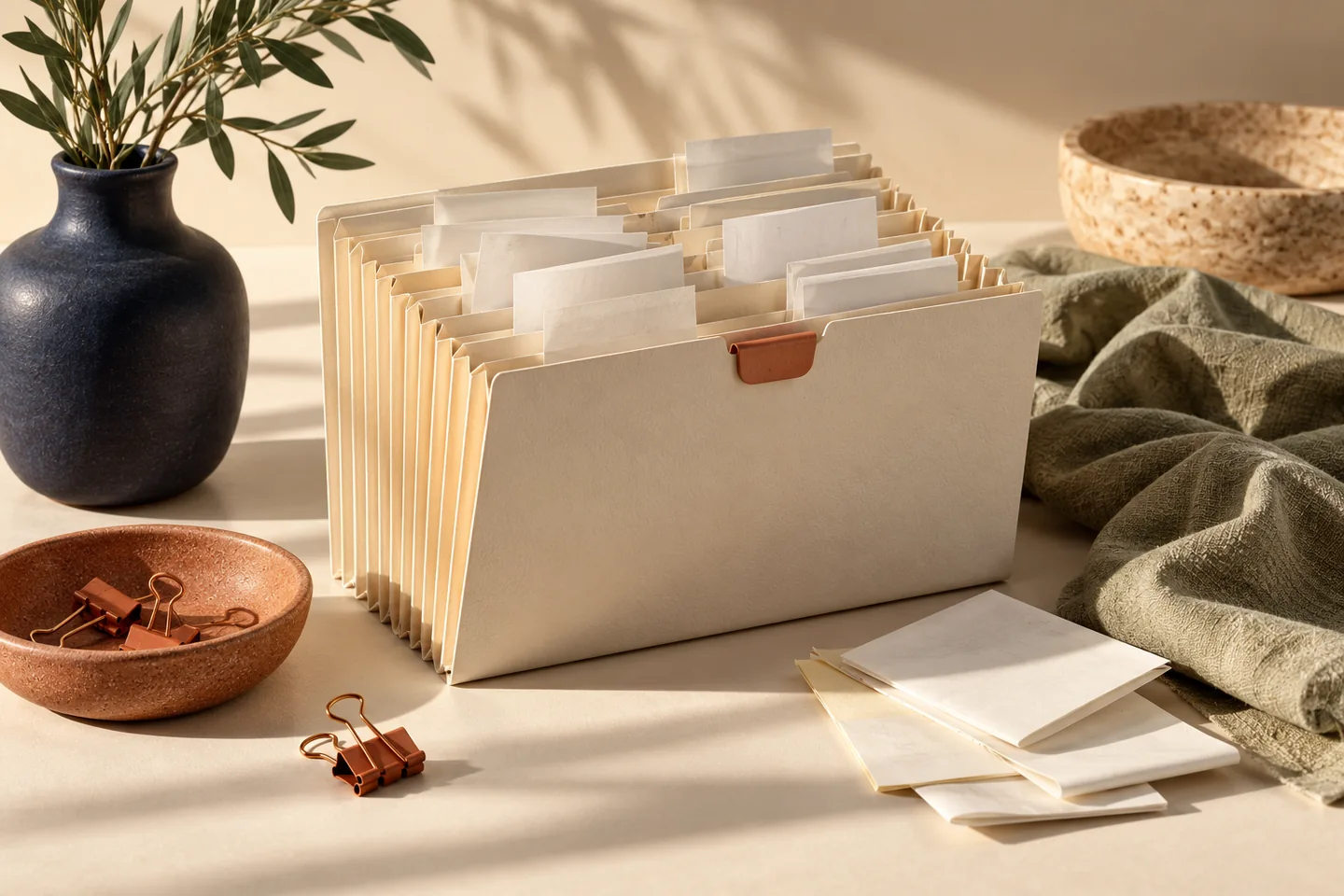
For items with warranties or large amounts, copy the receipt onto plain paper or make a clear scan, and file it with other important papers. Heat-sensitive paper fades, but a photocopy lasts. Keep the original too, in a closed folder away from heat and light. This extra step is worth taking for the few purchases where the proof may matter for years.
Keeping bills for returns separate
Put receipts for items still within a return window in a separate pocket or folder, apart from long-term papers. When the window ends, move them or discard them. The separation stops return receipts from getting lost in a pile, and a quick look shows what is returnable this week. A simple tray by the door, emptied every Sunday, can do this job well.
Link to the purchase
In your transaction note, write “receipt photographed” or the album name. When a return or claim arises, the note tells you where to look. The few seconds spent at the counter are saved many times over on the day a faded slip would have left you with no proof at all.
Useful ideas start with a clearer picture of your own spending.
Explore your reports
